
Across rural Guatemala, climate variability is increasingly affecting the livelihoods of small-scale farmers. Unpredictable rainfall, prolonged dry periods, and growing pressure on water resources are making agricultural production more challenging for farming communities that depend on the land for their income and food security.
Addressing these challenges requires more than technical solutions. It begins with understanding local realities, listening to communities, and identifying opportunities that respond to the specific conditions of each territory.
With this objective, the IMOX Programme recently carried out a series of field visits across the departments of Alta Verapaz, Quiché, and Huehuetenango in Guatemala. The visits aimed to gather baseline information that will guide future investments and actions in sustainable water management, climate adaptation, technological innovation, and the strengthening of agricultural value chains.
Implemented by We Effect and funded by the Embassy of Sweden in Guatemala, the IMOX Programme works to strengthen the resilience of rural production systems while promoting sustainable management of water resources and improving opportunities for small-scale producers involved in coffee, cacao, cardamom, and vegetable production.
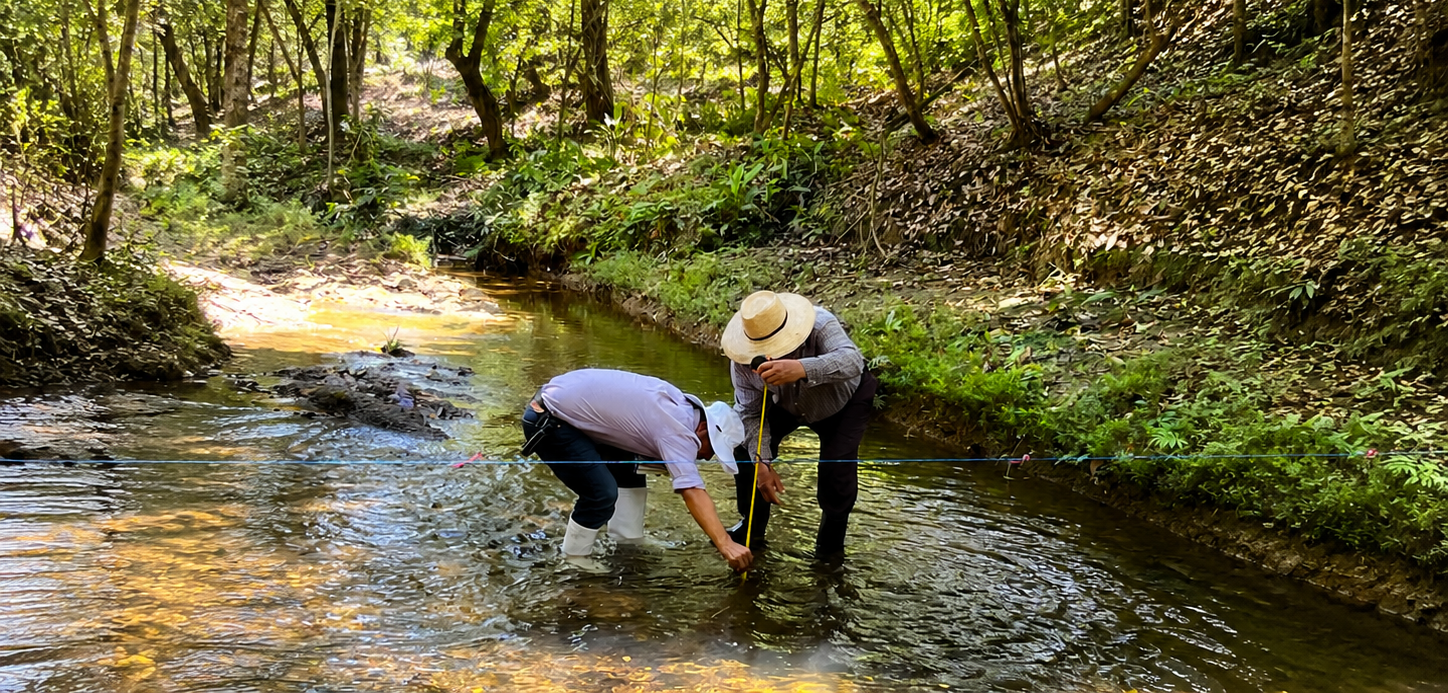
During the field visits, technical teams met with producer organizations, community leaders, farmers, and local partners to better understand the challenges affecting agricultural production and water availability. Site assessments included water source measurements, irrigation system inspections, field observations, and discussions on current farming practices and climate-related risks.
One of the key findings was the growing concern over water security. Many communities reported increasing difficulties linked to changing rainfall patterns, reduced water availability, and the need for stronger local capacities to adapt to climate-related shocks.
The information gathered during these visits will serve as a foundation for designing context-specific solutions together with local organizations and farming communities. Potential measures include rainwater harvesting systems, water reservoirs, soil conservation practices, agroforestry systems, and other sustainable approaches that can help strengthen resilience while protecting natural resources.
The field visits also reinforced an important lesson: effective climate adaptation cannot be designed from a distance. Each territory faces unique environmental, social, and economic conditions that require locally driven solutions and strong collaboration among farmers, community organizations, technical experts, and development partners.
By investing in local knowledge and strengthening collective action, the IMOX Programme contributes to building more resilient rural communities that are better equipped to face climate challenges while creating opportunities for sustainable agricultural development.
As climate impacts continue to intensify worldwide, experiences like these highlight the importance of placing farmers and communities at the center of the solutions that will shape a more resilient future.