
Waste management remains a growing challenge in many cities around the world, and Kenya is no exception. Recent flooding in major towns has once again highlighted how clogged drainage systems and overwhelmed municipal services are struggling to keep up with increasing urban populations and limited waste management resources. In markets like those in Meru, traders often work amid mixed waste, strong odours, and blocked drainage conditions that affect both business and public health.
In Meru County, however, an innovative solution is demonstrating that waste does not have to be a problem it can be a resource.
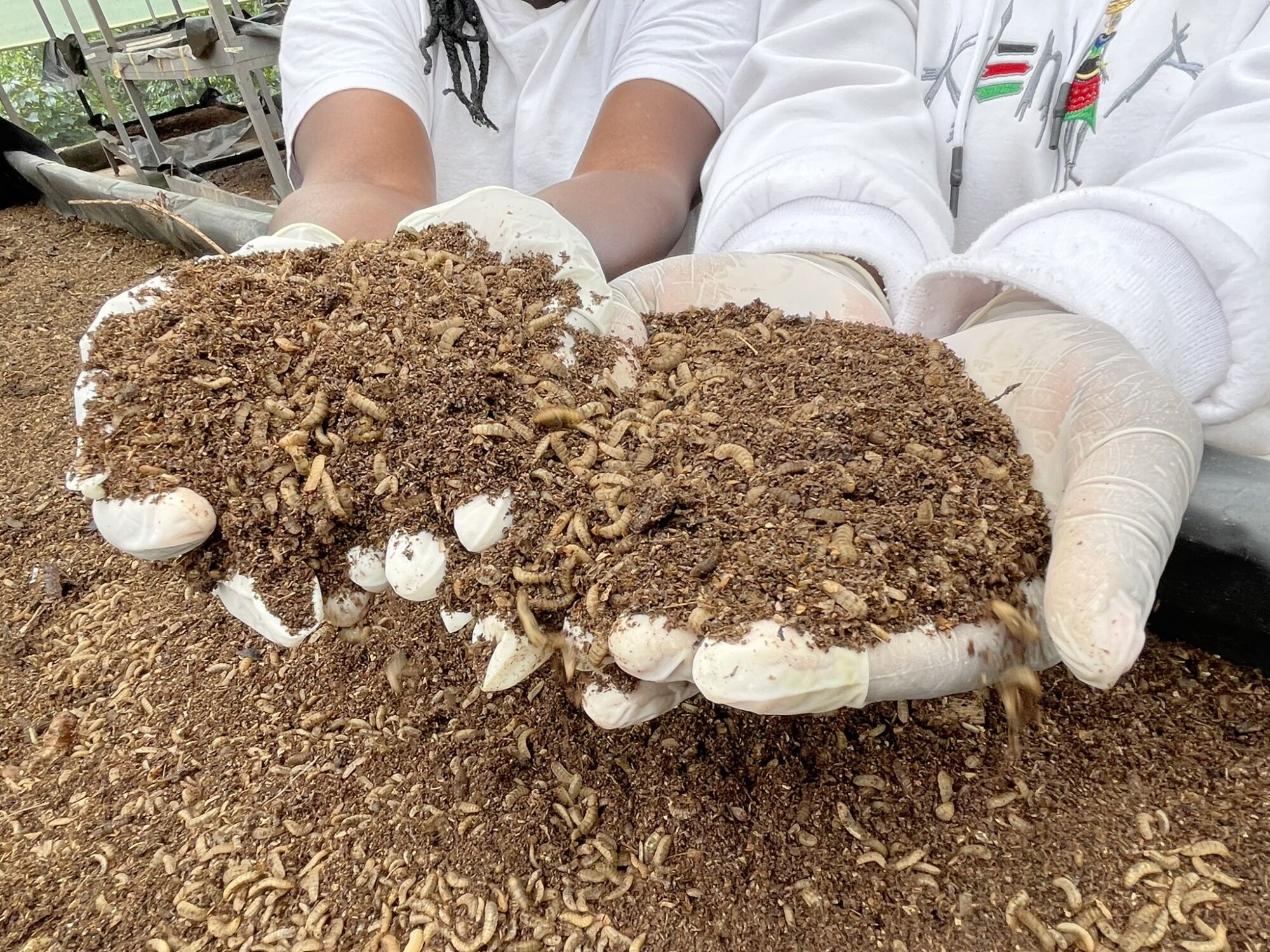
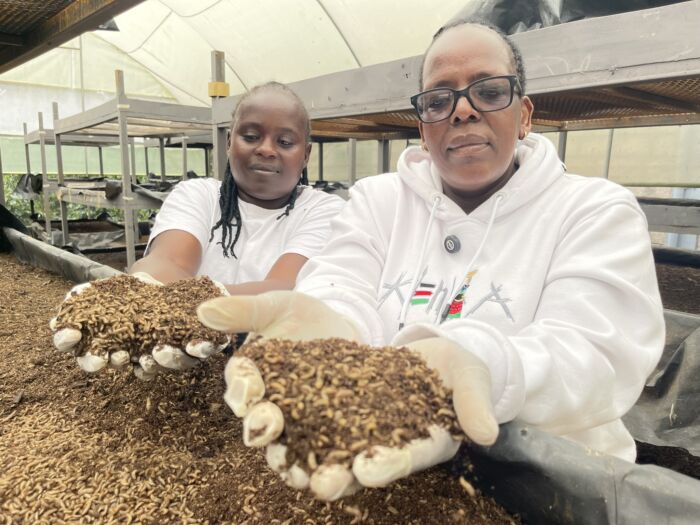
Through a partnership between We Effect, the International Centre of Insect Physiology and Ecology (icipe), and the Meru Central Coffee Cooperative Union, organic waste from major markets is being transformed using Black Soldier Fly (BSF) technology. The initiative applies circular economy principles by converting organic waste using the Black Soldier Fly (BSF) into high-value products such as poultry feed and organic fertilizer (commonly known as frass).
The process is simple but powerful. Black Soldier Fly larvae feed on organic waste collected from markets and nearby food outlets. As the larvae consume the waste, they convert it into nutrient-rich biomass that can be processed into animal feed, while the residue becomes organic fertilizer. This approach not only reduces waste going to dumpsites but also creates value for smallholder farmers and local businesses.
However, the success of the system begins at the source.
Market sensitization is a critical component of the initiative, creating awareness and ensuring that market traders particularly women vendors and youth understand the importance of separating organic waste for easier collection and processing. Sensitization activities have been conducted in major markets across Meru County, including Gakoromone, Nkubu, and Githongo, among others. These sessions provide practical demonstrations, allowing traders to see firsthand how waste separation improves market cleanliness.
For many traders, the initiative is already changing how they view waste.
We used to throw everything together, and it became a real challenge in the market with foul smells, poor hygiene, and environmental concerns,” says Lydia, a fruit vendor at Gakoromone Market. “Now we understand that the waste from our stalls can become something valuable. When we separate it properly, it helps keep the market clean and also benefits us as farmers.”
“In about three hours each day, I collect nearly one tonne of waste. Through this initiative, organic waste is being turned into fertilizer, which helps reduce reliance on synthetic fertilizers that are increasingly associated with health and environmental risks in Meru County. The project has also brought us together, and we are now forming a cooperative that will help us keep our markets clean while saving and supporting one another.”
Additionally, the team recently held consultations with the Meru Municipality, which plays a central role in waste management within the county. The municipality expressed strong interest in partnering with the initiative to integrate the BSF approach into the county’s waste management systems. Municipal officials also visited the BSF processing facility operated by the Meru Central Coffee Cooperative Union, where they observed how organic waste is converted into valuable products.
The officials expressed optimism that the model will help reduce pressure on waste collection systems and improve urban cleanliness. They also recommended expanding waste sourcing beyond markets to include hotels, schools, and residential areas, noting that projected waste volumes may be lower than initially anticipated.
At the processing facility managed by the Meru Central Coffee Cooperative Union through the support of Postcode Lotter, Sweden, organic waste collected from markets is converted into useful products.
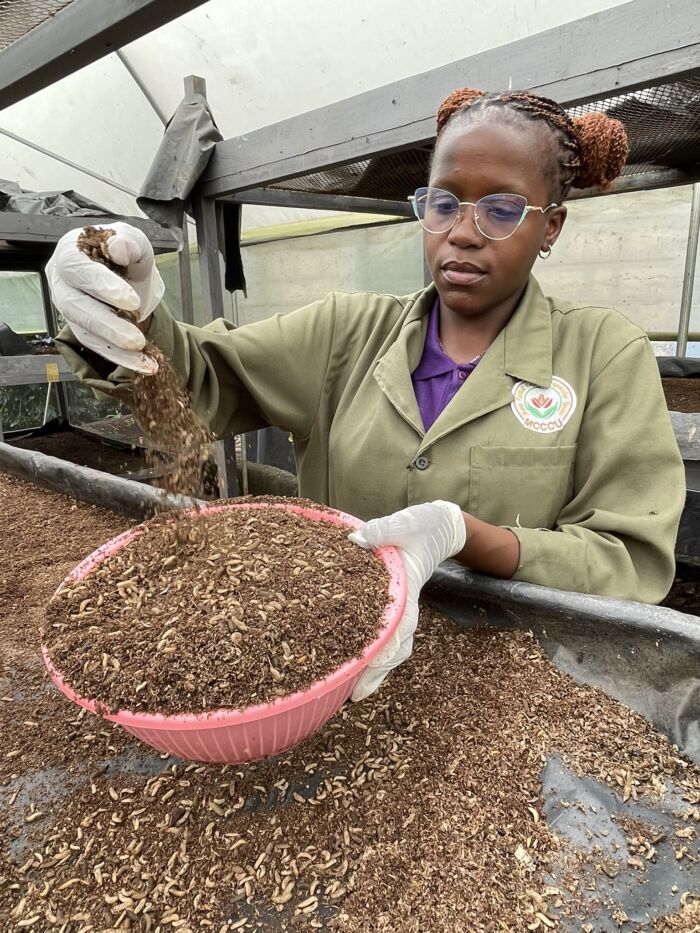
“Every day we receive organic waste that would otherwise end up in dumpsites,” explains Carole Kainyu, BSF Factory Manager. “Through the Black Soldier Fly process, we have started converting this waste into organic fertilizer (frass), which is currently undergoing registration and packaging. It will soon be available in farm input stores. This not only supports farmers but also demonstrates that waste can become an economic opportunity.”
According to Dr. Shaphan Yong Chia, a lead scientist at icipe, the potential of Black Soldier Fly technology continues to gain global recognition.
“FAO has recognized Black Soldier Fly as an important ingredient in poultry, fish, and pig feed formulation due to its high protein content,” he explains. “This has the potential to significantly reduce feed costs for smallholder farmers.”
Through innovation, strong partnerships, and active community involvement, the Waste for Cash initiative is proving that waste is not a burden but a resource. By transforming organic waste into valuable products, the programme is not only improving waste management in Meru County but also enhancing livelihoods and building a more circular, sustainable local economy.