Mozambique
Mozambique is located in southeastern Africa. It is bordered by the Indian Ocean to the east, Tanzania to the north, Malawi and Zambia to the northwest, Zimbabwe to the west, and Eswatini and South Africa to the southwest. The capital city is Maputo. Mozambique has a long coastline along the Indian Ocean, making it vulnerable to extreme weather events. The country is known for its rich cultural heritage and diverse landscapes.
We Effect has been active in Mozambique since 2003, with the aim to improve the livelihood of people living in poverty, particularly those that are from rural areas and especially women.
We Effect operates through two offices in Mozambique: the Country Office in Maputo and a Programme Office in Lichinga, Niassa Province. Our presence in Niassa reflects our commitment to working close to the communities, farmer organisations and partners we support. Being locally present allows us to better understand people’s realities, respond to emerging needs and ensure that our programmes remain relevant and effective. It also strengthens collaboration, learning and accountability, while enabling regular engagement with rights holders and local stakeholders. By staying close to the people we serve, We Effect is better positioned to support locally driven solutions and deliver lasting, sustainable impact.
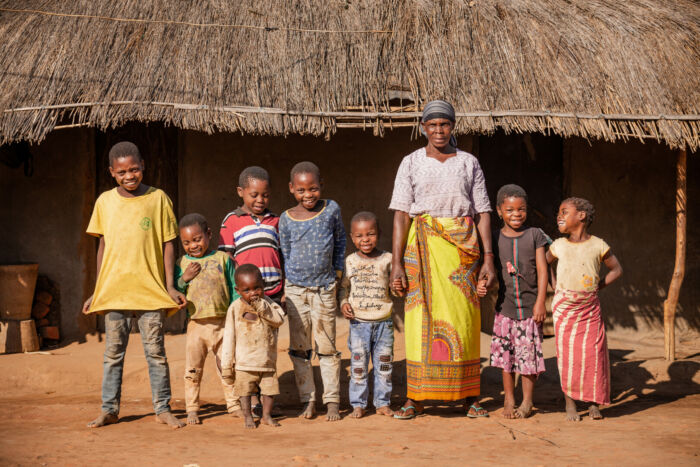
Jamia a farmer from Niassa, Mozambique with her family. Photo by Edson Arthur
Development Context
Mozambique is home to an estimated 34.6 million people, the majority of whom are under the age of 25, making it one of the youngest populations in the world. Despite notable economic potential and abundant natural resources, the country continues to face profound development challenges. Mozambique ranks among the lowest countries on the Human Development Index, placing 183rd out of 193 countries in the latest UNDP Human Development Report.
Multidimensional poverty remains widespread, with around 61% of the population experiencing overlapping deprivations in health, education and living standards, while a further 17% are considered vulnerable to falling into multidimensional poverty. Rural areas are disproportionately affected, particularly in the northern and central provinces.
Climate shocks, recurring natural disasters, conflict-induced displacement and limited access to basic services continue to exacerbate poverty and inequality. These challenges highlight the importance of strengthening resilient livelihoods, promoting social inclusion and supporting locally led development to ensure that no one is left behind.
Food Security and Nutrition
Agriculture is the backbone of Mozambique’s economy and the primary source of income for most rural households. However, smallholder farmers continue to face significant barriers, including limited access to quality agricultural inputs, improved technologies, affordable finance and reliable markets. These challenges, combined with climate-related shocks, constrain productivity, incomes and long-term resilience. Food and nutrition insecurity remain widespread.
In the 2025 Global Hunger Index, Mozambique ranks 103rd out of 123 countries, with hunger classified as a serious challenge. Child malnutrition is particularly alarming, with 37% of children under five affected by stunting, limiting their physical and cognitive development and future opportunities. Limited access to financial services further restricts the ability of rural families, especially women and young people, to save, invest and withstand economic shocks. At the same time, many households live in inadequate and climate-vulnerable housing, with few opportunities to access affordable housing finance or resilient construction solutions.
Through strong local partnerships, We Effect works to strengthen sustainable agriculture, improve food and nutrition security, expand financial inclusion and promote resilient housing, enabling communities to build secure and sustainable livelihoods
Climate Change and Gender Equality
Mozambique faces the combined impacts of conflict, displacement and climate change, which continue to undermine livelihoods and development gains. In the northern province of Cabo Delgado, ongoing insecurity has displaced more than 540,000 people, while over 577,000 people remain displaced across Cabo Delgado, Nampula and Niassa. Women and children are disproportionately affected, often losing access to land, livelihoods and essential services. These challenges are compounded by the climate crisis.
Mozambique is among the world’s most climate-vulnerable countries, ranking as the 53rd most vulnerable globally according to the ND-GAIN Index. Recurrent cyclones, floods, droughts and irregular rainfall continue to damage infrastructure, disrupt agricultural production and threaten food security, particularly in rural communities that depend on rain-fed agriculture. The combination of conflict, displacement, poverty and climate shocks makes recovery and resilience-building especially challenging, leaving millions of people vulnerable and in need of sustainable development solutions.
Gender inequality remains a critical issue in Mozambique, with high rates of child marriage, adolescent births, and gender-based violence. Despite some progress in political representation and legal frameworks promoting gender equality, significant disparities persist, especially in rural areas. Organizations like We Effect work in Mozambique to address these vulnerabilities, focusing on empowering marginalized communities, promoting food security, gender equality, climate change resilience, and sustainable development to break the cycle of poverty.
In Mozambique, We Effect collaborates with 24 implementing partner organisations across Mozambique, including 15 long-term core partners and nine small-grant partners. Our partners represent a diverse range of civil society organisations with deep roots in the communities they serve and a strong commitment to sustainable development and social justice. They include member-based organisations such as farmers’ unions, associations and cooperatives, women’s rights organisations, and specialised non-governmental organisations working in rural development. Together, they advance inclusive and sustainable solutions in areas such as agriculture, climate resilience, financial inclusion, housing, gender equality and community empowerment. Our partnership network also includes organisations representing and advocating for the rights of persons with disabilities, including the national forum of persons with disabilities. By working through strong local partners, We Effect helps strengthen local leadership, amplify community voices and support lasting, locally driven development.
In Mozambique, We Effect brings more than funding to development programmes. With over six decades of experience working alongside farmer organisations, cooperatives and civil society partners, we contribute specialised knowledge, proven methodologies and practical tools that strengthen local capacities and create lasting, sustainable change.
Our work is guided by a Human Rights-Based Approach, ensuring that participation, equality, accountability and empowerment are at the centre of all interventions. We promote gender equality through transformative approaches that address the underlying causes of discrimination and support inclusive development for women, men and young people. We also integrate climate resilience and environmental sustainability across our programmes, helping communities adapt to changing conditions while safeguarding natural resources for future generations.
Through organisational development support, we strengthen the governance, leadership, financial management and long-term sustainability of partner organisations. By combining participatory learning methods, digital innovation, conflict-sensitive approaches and strong anti-corruption practices, We Effect helps partners and communities build their capacity to drive their own development. This holistic approach ensures that results are not only effective, but also locally owned, inclusive and sustainable.
Results in Mozambique
Impact at a Glance
Over the past two years, We Effect Mozambique and its partner organisations have reached more than 40,500 rights holders directly (60% women) and an additional 127,700 people indirectly (55% women), empowering women, men and young people to improve their livelihoods, strengthen resilience to climate change and advance gender equality. Together with our partners, we have supported communities to become agents of change, promoting sustainable food systems, economic empowerment, climate resilience and inclusive development.
Sustainable Agriculture: 13,374 smallholder farmers
- 60% of them women, were trained in Sustainable Agriculture and Land Management Approaches (SALMA), increasing the adoption of agroecological practices and improving agricultural productivity.
Economic Empowerment and Financial Inclusion
- 7,895 farmers (61% women) participated in structured value chains, generating over MZN 6.9 million in income.
- 308 Village Savings and Loan Associations (VSLAs) mobilised more than MZN 21.1 million in savings, strengthening financial inclusion, economic autonomy and household resilience.
Climate Resilience and Environmental Stewardship
- 5,407 farmers adopted climate-smart and adaptive agricultural practices.
- 22 ecosystem restoration centres were established and 21 hectares of degraded land rehabilitated, contributing to environmental restoration and community-led climate action.
Gender Equality and Women’s Leadership
- 4,704 women gained access to improved technologies, leadership opportunities and decision-making spaces.
- Women’s leadership and representation within farmer organisations increased, while advocacy initiatives helped challenge discriminatory norms and amplify women’s voices.
Resilient Housing
- 18 masons, including three women, and 15 cooperatives were trained in climate-resilient construction techniques, helping communities improve housing resilience to extreme weather events.
Land Rights
- 300 land titles were secured for housing and agricultural purposes, with 80% issued to women, strengthening land tenure security and women’s economic empowerment.
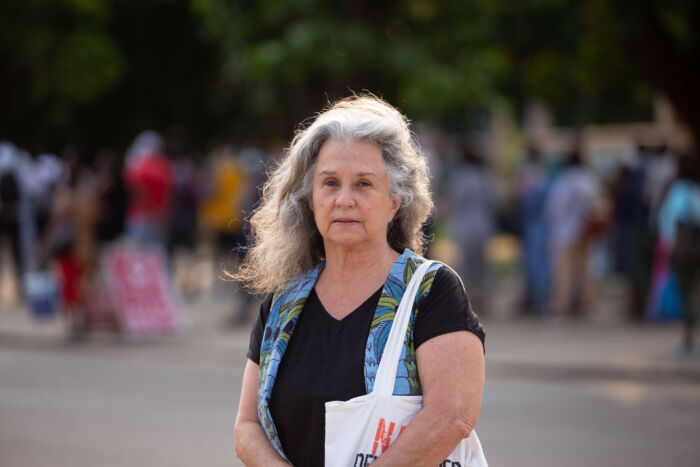
“We need to give a voice to the nature”
Four environmental activists are murdered every week. That it’s the reality Anabela Lemos is facing. Each day.
“I believe we need to give a voice to the nature and the ones that cannot have a voice”, says Anabela Lemos, who is defending the environment in Mozambique, since 22 years.