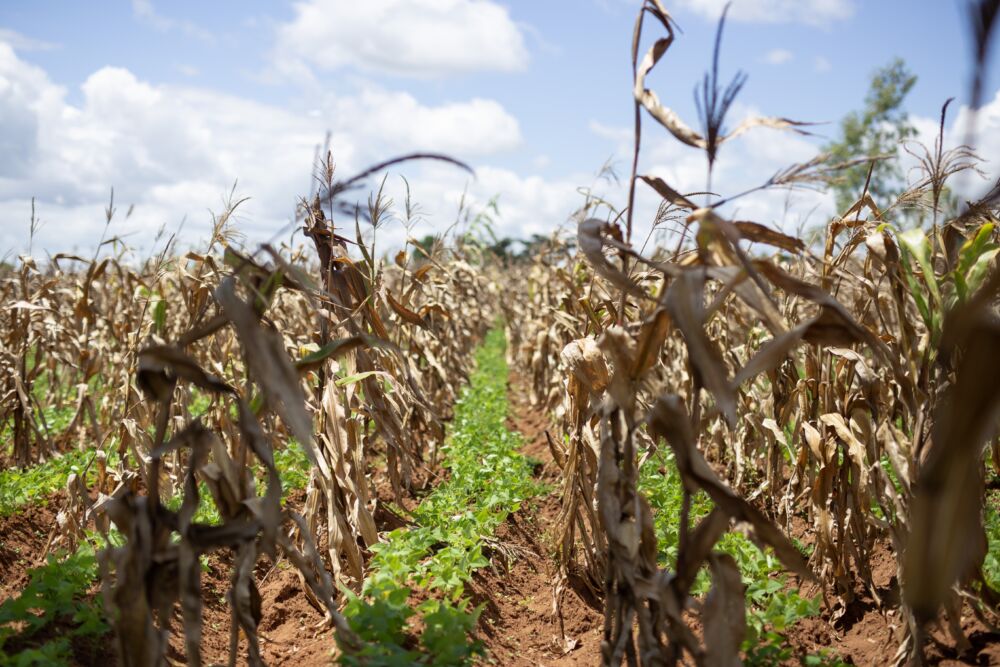
Zambia
Zambia lies in the heart of Southern Africa and shares borders with eight countries: Tanzania, Malawi, Mozambique, Zimbabwe, Botswana, Namibia, Angola, and the Democratic Republic of the Congo.
As of January 2026, the country has an estimated population of 22.5 million people, representing around 72 ethnic groups and cultures, all of Bantu origin. This rich cultural diversity is one of Zambia's greatest strengths and underscores the importance of inclusive and equitable development.
For more than four decades, We Effect has partnered with cooperatives, member-based organisations, and civil society in Zambia to reduce poverty, strengthen women’s economic empowerment, and promote sustainable livelihoods. Working alongside local partners, We Effect supports communities to build resilient food systems, advance gender equality, strengthen climate resilience, and improve economic opportunities for rural households.
We Effect has worked in Zambia since the late 1970s, initially supporting maize marketing cooperatives and contributing to the establishment of the Zambia Cooperative College. Since opening its Country Office in 1996, We Effect has expanded its partnerships with cooperatives and member-based organisations to strengthen sustainable development, human rights, and inclusive economic growth. In 2013, the organisation changed its name from the Swedish Cooperative Centre (SCC) to We Effect.
We Effect in Zambia We Effect applies a Human Rights-Based Approach (HRBA) that strengthens the capacity of cooperatives, member-based organisations, and civil society to promote sustainable development and enable communities to claim their rights.
Our work in Zambia focuses on four strategic priorities:
- Women’s economic, social, and political empowerment
- Climate-resilient agriculture and sustainable food systems
- Enterprise development and inclusive value chains
- Strengthening cooperatives and locally led civil society organisations
Through these priorities, We Effect contributes to improved livelihoods, stronger local economies, greater climate resilience, and more inclusive development.
Development Context
Poverty and Inequality
Despite continued economic growth, poverty remains one of Zambia’s greatest development challenges.
According to the 2025 Equity Assessment Report, approximately 60.4% of the population lives below the national poverty line, while 48% experience extreme poverty. Rural communities are disproportionately affected, with rural poverty estimated at 77%, compared to 32.7% in urban areas.
Persistent inequalities in access to education, healthcare, productive resources, finance, and markets continue to limit opportunities for millions of Zambians, particularly women and young people.
Food Security and Nutrition
Food security improved during 2026 following above-average harvests, increased maize production, and declining food prices.
However, these gains remain fragile, as they have been driven largely by favourable weather conditions and temporary interventions rather than long-term transformation of food systems.
Approximately 1.7 million people across 43 hotspot districts continue to face acute food insecurity, particularly in drought-prone areas. Smallholder farmers remain vulnerable to climate shocks, limited irrigation, and inadequate access to finance and markets.
Long-term food security will depend on building climate-resilient agriculture, diversified livelihoods, and inclusive value chains that strengthen the right to food.
Malnutrition also remains a major concern.
- 34.6% of children under five are stunted.
- 4.2% suffer from wasting.
- 5.2% are overweight.
- 31.5% of women are anemic.
These figures reflect the country’s double burden of undernutrition and overnutrition.
Climate Change and Gender Equality
Climate change continues to threaten Zambia’s agricultural productivity and rural livelihoods. Frequent droughts and floods affect food production, water availability, and household incomes.
The Climate Risk Index (CRI) 2022 ranks Zambia 66th out of 187 countries, highlighting the country’s high exposure to climate-related risks.
Gender inequality also remains a significant development challenge. Women continue to experience unequal access to productive resources, education, finance, land ownership, and decision-making opportunities, limiting their economic participation and resilience.
Impact at a Glance
Results in Zambia
- 48,198 rights holders supported: We Effect strengthened the capacity of 48,198 rights holders, enabling them to access services, participate in decision-making, and claim their rights.
- 280 cooperatives strengthened: We supported 280 cooperatives to improve their governance, organisational capacity, market access, and long-term sustainability.
- 29,373 women economically empowered: Women gained greater access to finance, agricultural knowledge, and climate resilience through targeted interventions. These efforts included:
- 15,103 women accessing financial services through Village Savings and Loan Groups (VSLGs) and banking partnerships.
- 8,344 women trained through Farmer Field Schools and Study Circles.
- 5,926 women covered by climate insurance, providing financial protection against droughts and floods.
- 14,388 farmers adopting climate-resilient agriculture: Farmers were supported to transition to organic and climate-smart agricultural practices, improving productivity, soil health, and resilience to climate change.
- 28,713 families strengthening sustainable livelihoods: Households improved their income security through better access to productive resources, market opportunities, skills development, and climate-resilient livelihood strategies.
- 7,759 women establishing enterprises: Women received support to establish and expand small businesses and microenterprises, contributing to increased household incomes and local economic development.